By: Lubaina Plumber Why did you want to attend the workshop and share your story? So, to me it was a natural next step when I was given the opportunity to be part of the Voices Workshop. I've worked in gender based violence my whole life and as a survivor...
By; Samman Masud In this digital short film, “What Not to Say”, I wanted to take the opportunity to talk about the experiences and conversations I had with my community members around the time I gave birth to my two wonderful daughters. To some, these experiences would not necessarily qualify...
By: Sinnah Bangura After I had my daughter, I was introduced to a support group with other survivors of FGC. I found a YouTube video where a survivor was speaking about her experience undergoing the practice and the impact it’s had on her life. It was at this point that...
Why did you want to attend the workshop and share your story? I was interested in attending the workshop as it was the first one that I had come across that focused on survivors of FGM/C. I wanted to connect with other survivors and hear their stories, while also being...
By: The Anole Sister Being an Anole Sisters member, I am an FGM/C survivor. For the past four decades, I have lived with this experience. Since 2015, I have been advocating for and raising awareness about FGM/C along with other survivors, women, and girls at risk. However, I had never...
Why did you want to attend the workshop and share your story? I've had the opportunity to talk about my experience with female genital mutilation (FGM) and the ways in which it has impacted my life and my community. However, finding a platform that allows me to take ownership of...
Why did you want to attend the workshop and share your story? I wanted to attend the workshop because I recognized it as a unique opportunity to share my journey with FGM/C, a silent struggle I had endured for years. The workshop offered a platform for me to break that...
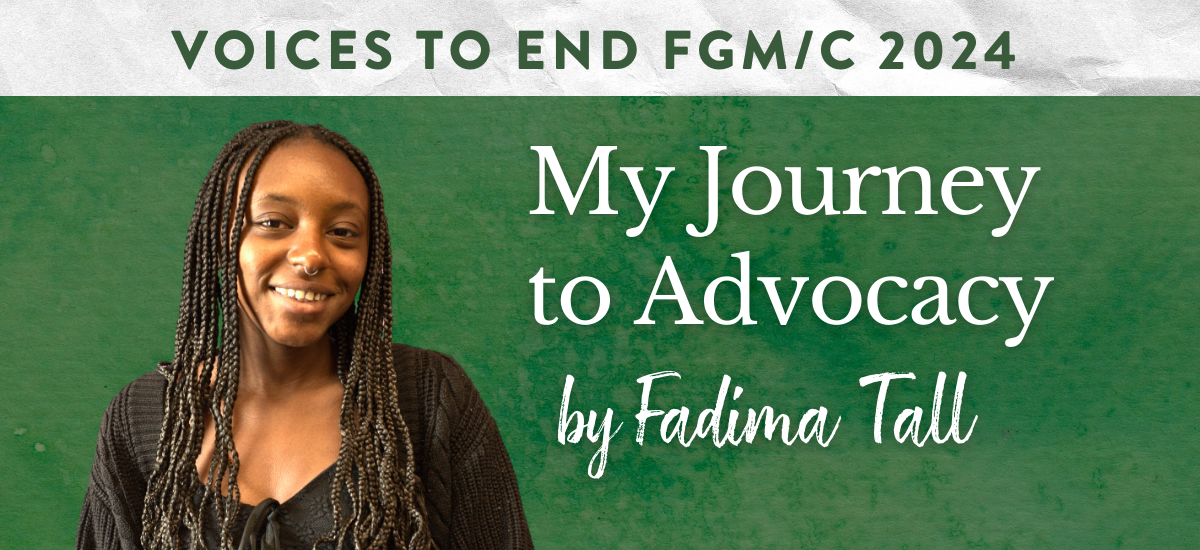
By: Fadima Tall When I was invited to join the Sahiyo Voices to End FGM/C workshop, I was hesitant to accept. I had only been in the field of FGM/C advocacy for a few months and was still finding my footing as an advocate. I had always struggled with speaking...
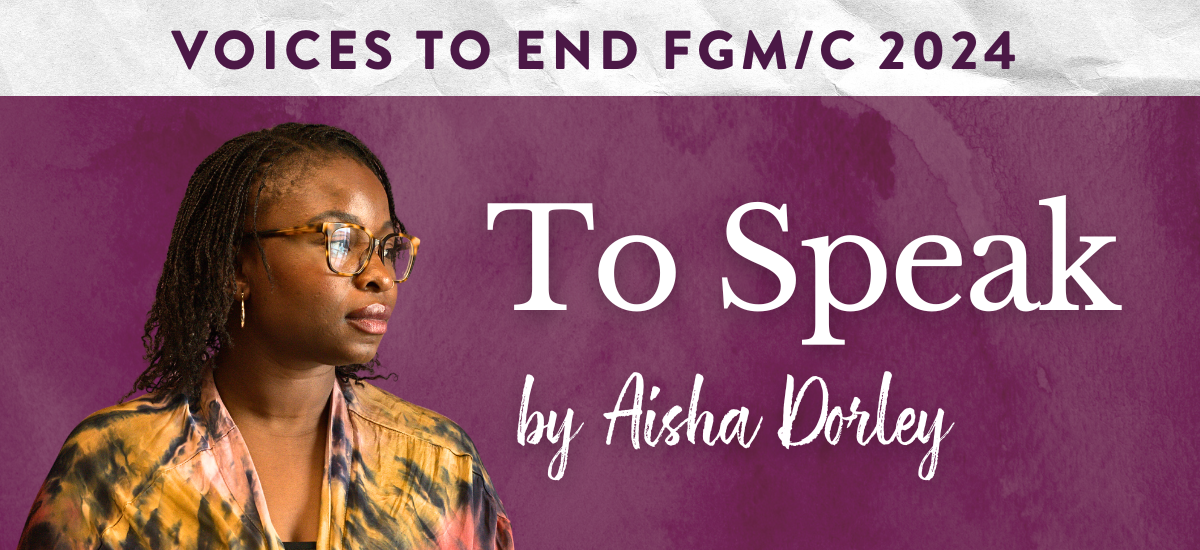
By: Aisha Dorley I first came across the Voices to END FGM/C platform in the fall of 2022. The videos were so personal, vulnerable, and gripping. At the same time, they were educational in a way that no article or research paper could be. When I was presented with the...
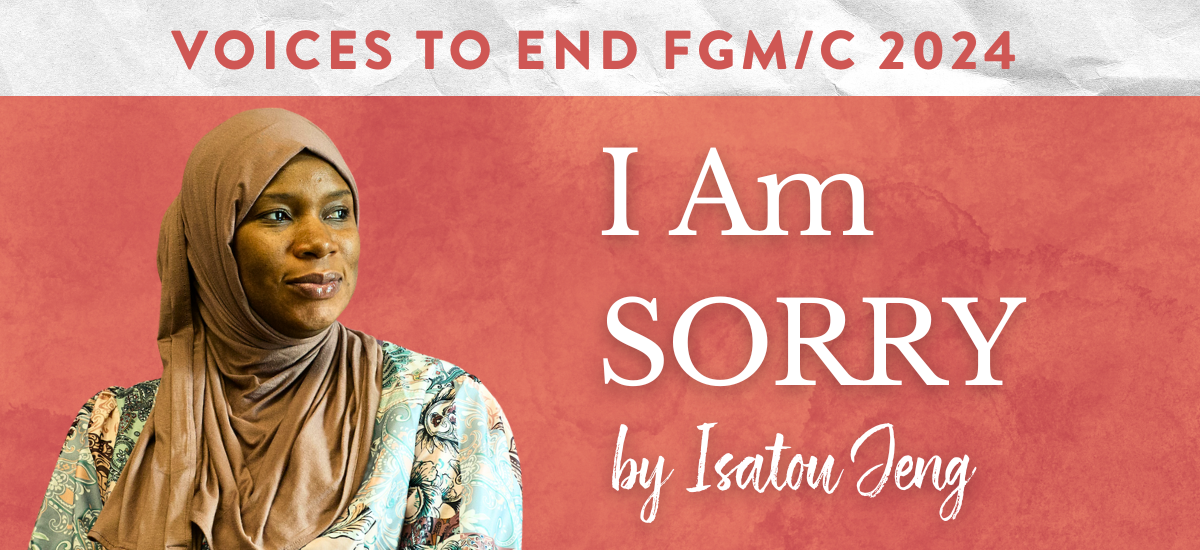
By: Isatou Jeng For over a decade, I have used my voice and my story as a survivor of FGM/C to raise awareness around the issue. I started at a time when it was considered too ‘shameful’ to share my personal experience as a survivor. I am glad that I...
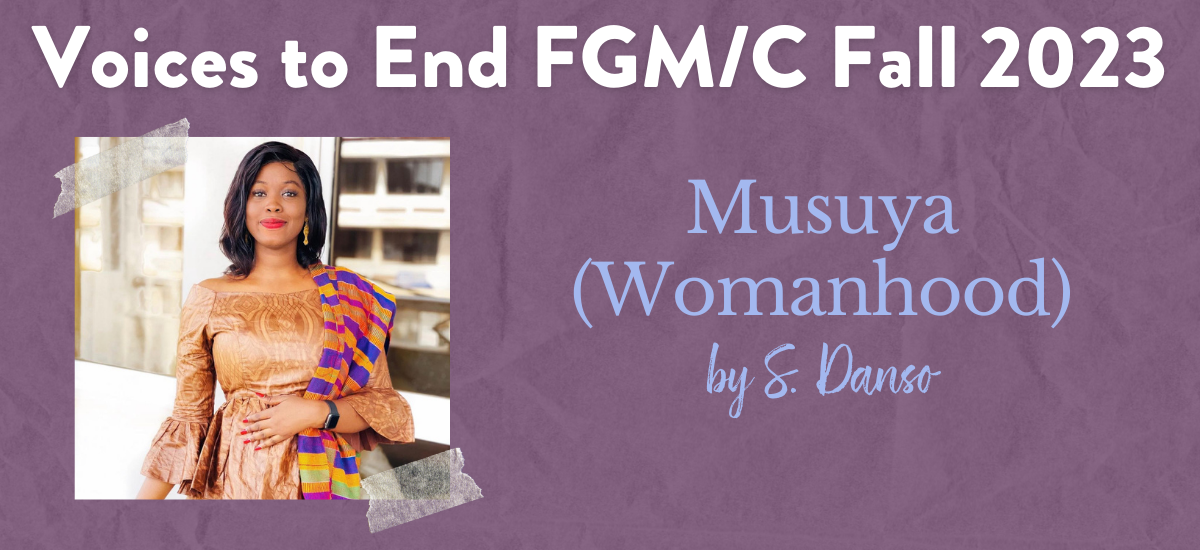
“I believe they don't really know what it is and how it is conducted, the procedures, and the negative impact that it has… It will be easy to say ‘don’t ban FGM’ when you don’t know what happened in there.” In S Danso’s country, men are working in Parliament to...
By Amie Kujabi I am an FGM/C survivor. For the past two decades, my advocacy on FGM/C has been centered around other survivors and girls at risk—but never have I shared my story. A story that shaped the trajectory of my childhood and marked the beginning of a long…long…lonely self-awareness...
Gugu Makhari learned about the Voices to End FGM/C digital storytelling project through a friend and through personal research online. She wanted to share a story about how both female genital cutting (FGC) and male circumcision are normalized in her community. Those who undergo these harmful practices are often celebrated...
By Jeniffer Dias When I learned I had an opportunity to participate in the Voices to End FGM/C workshop, I first talked with my mentor, Bárbara Oliveira, and told her that I would like to talk about myself. She told me: “This is the moment to remove your ‘mask’ and...
By Isatou Jallow In my film “Behind The Wall,” I've chosen to share my deeply personal experience with Type 3 Female Genital Mutilation (FGM). Through this storytelling, my aim is threefold. First, I want to educate. FGM, deeply rooted in tradition, often goes unquestioned. By unveiling the raw pain and...
By Aries Nuño In participating in Sahiyo's Voices to End FGM/C digital storytelling workshop, I chose to share a story that examined my journey toward understanding women’s health. This journey was not just a personal quest, but a response to a disquieting cultural reality: the pervasive silence among generations of...
By Faizneen Bharmal Growing up in a progressive and well-educated Dawoodi Bohra family, the topic of Khatna, commonly known as female genital mutilation/cutting (FGM/C) around the world, was always shrouded in silence. The subject was rarely broached unless one became a parent, at which point it became relevant. For the...
Why did you want to attend the workshop and share your story? I wanted to attend this workshop because I wanted to get a sense of the process of storytelling from a survivor’s and advocate's perspective. I am keeping in my heart hundreds of stories that survivors from my community have...
Why did you want to attend the workshop and share your story? I attended the workshop to learn about digital storytelling as another medium of communication in my advocacy work to stop female genital mutilation/cutting (FGM/C). What story did you choose to tell and create into a digital story? I...
By Anonymous Why did you want to attend the workshop and share your story? I attended the workshop to finally tell my story and give it the voice it deserves. I have never talked about my experience before, and as someone who wants to help other people share their stories,...
By Umme I play a lot of video games. I watch even more video essays about video games. Written and recorded by people who’ve made careers out of literary analysis, these videos feel a bit like a virtual book club, joining with thousands of other viewers and commenters to play,...
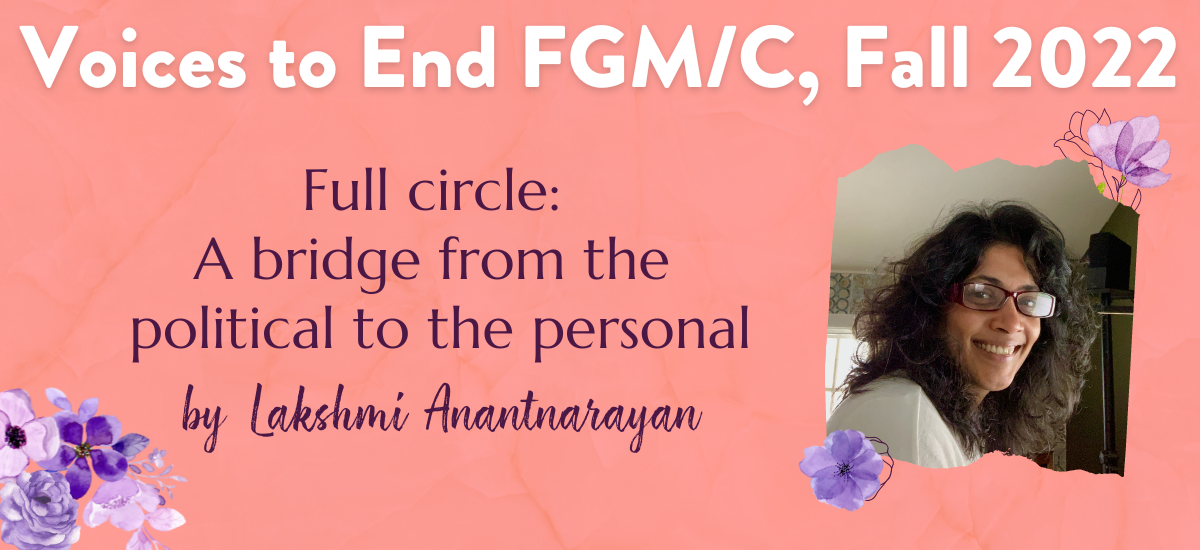
By Lakshmi Anantnarayan I recently attended Sahiyo and Story Center’s Voices to End FGM/C Digital Storytelling workshop to share my experience as an anti-female genital mutilation (FGM) advocate. I certainly did not expect the process to be so enlightening and personally fulfilling! Though my work to end FGM goes back more than...
Sahiyo is happy to announce we’re hosting our first hybrid-format Voices to End FGM/C Digital Storytelling Workshop this August 2023! During this workshop, each participant will learn to create their own video through the use of voiceover audio, still images, and video clips. This participatory media process will be guided by facilitators...
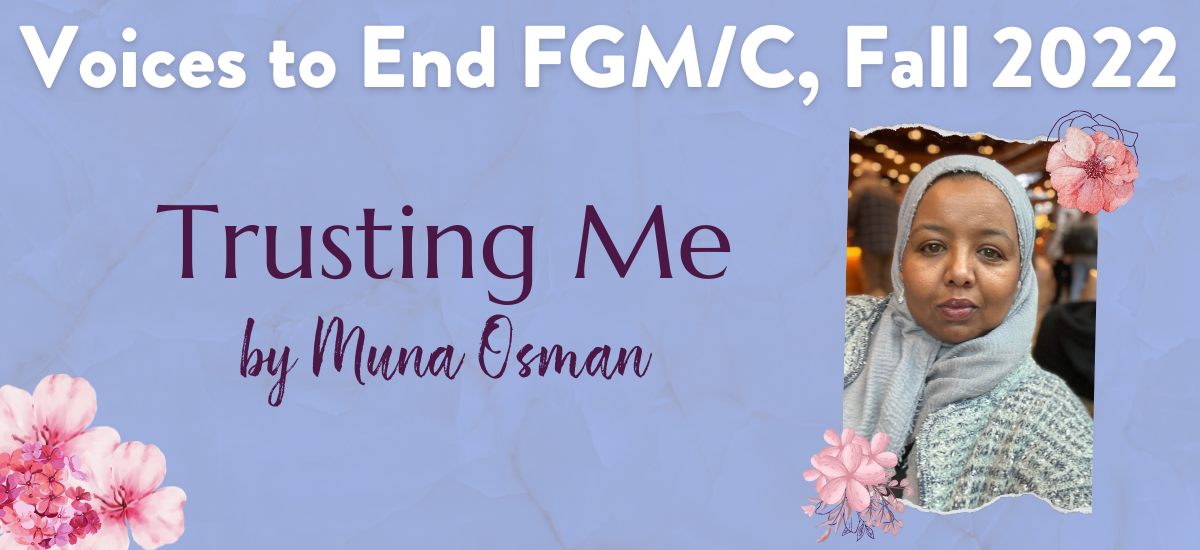
By Muna Osman Why did you want to attend the workshop and share your story? I first found out about the Voices workshop when I met with Mariya. The meeting was in a different setting; I had no idea about the workshop before she told me about what Sahiyo does...
By Nazneen Vasi The topic of Khatna, also known as female genital cutting (FGC), has always been interesting. Within my family, there are those who are against it, and those who support it. It is clearly not a religious custom, but more cultural. How did it even become a part...
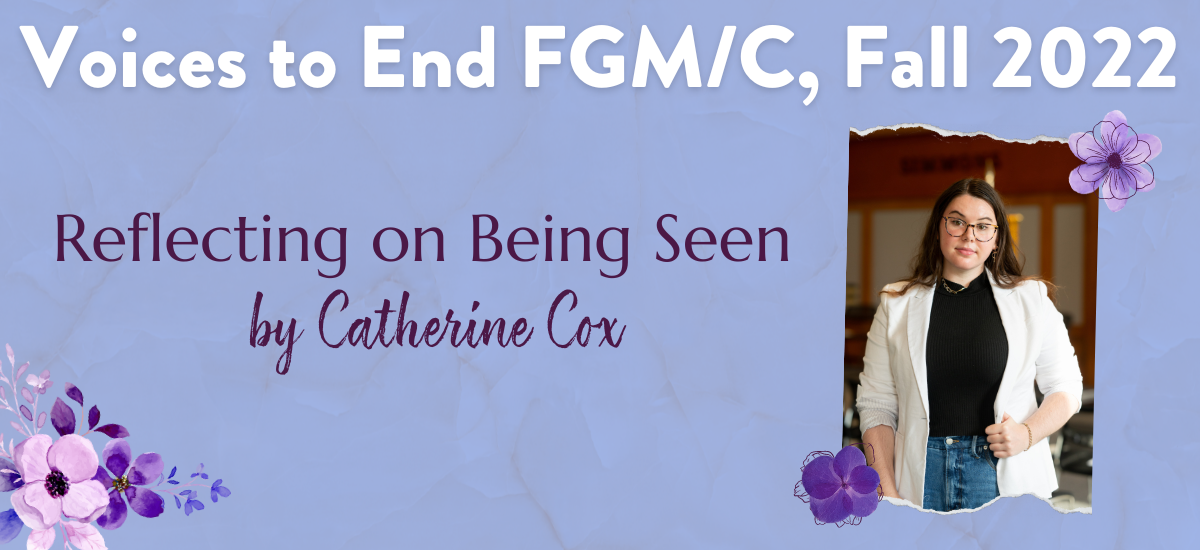
By Cate Cox Despite working at Sahiyo for nearly three years, it wasn’t until recently that I decided to participate in our popular ‘Voices to End FGM/C’ digital storytelling workshop. For so long I’ve been inspired by the strength and bravery of the storytellers I watched on my computer screen....
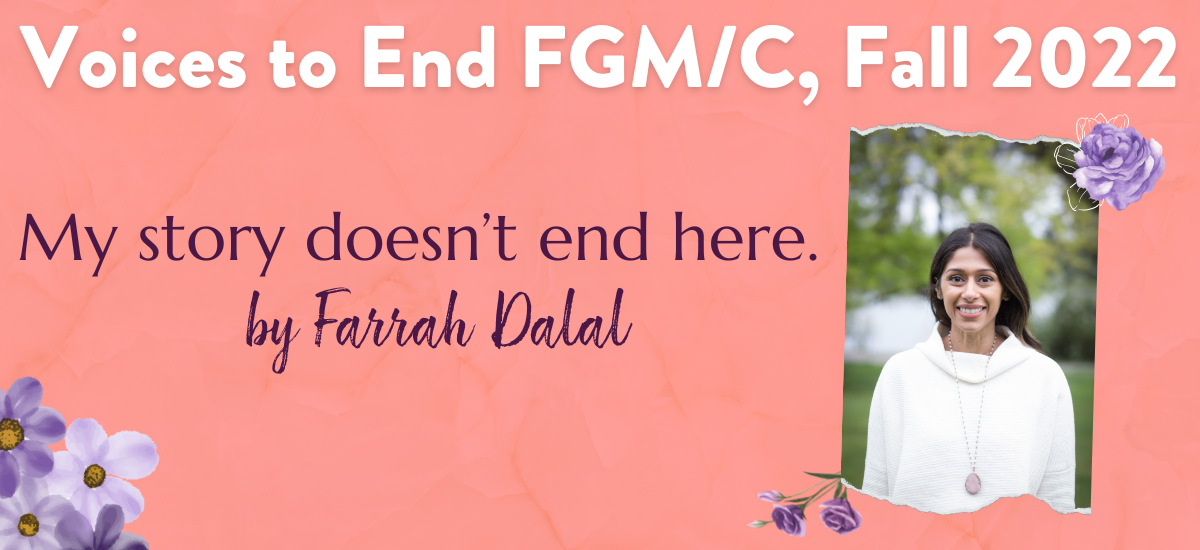
By Farrah Dalal I could speak to a multitude of ways in which female genital mutilation/cutting (FGM/C) has impacted my life and experiences. However, I choose to focus my first attempt at storytelling on my college years, rather than the actual physical trauma I endured. Here’s why: Many of us...
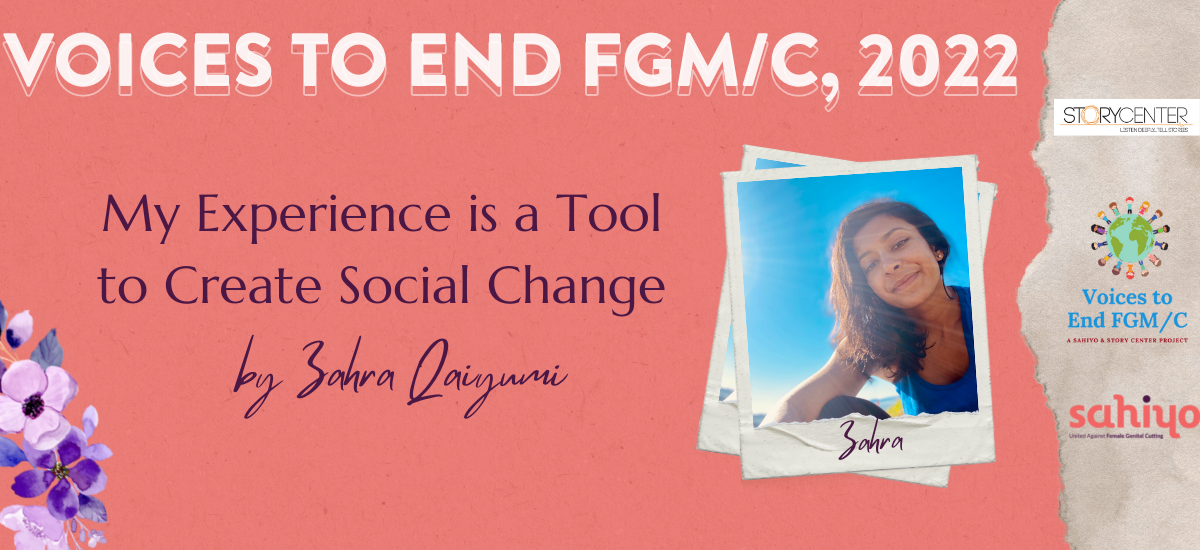
By Zahra Qaiyumi In the process of creating a video as part of the Voices to End FGC project, I was able to pull scattered thoughts and memories into a clear and concise picture. The workshop allowed me to contemplate the different aspects of my experience as a survivor and...
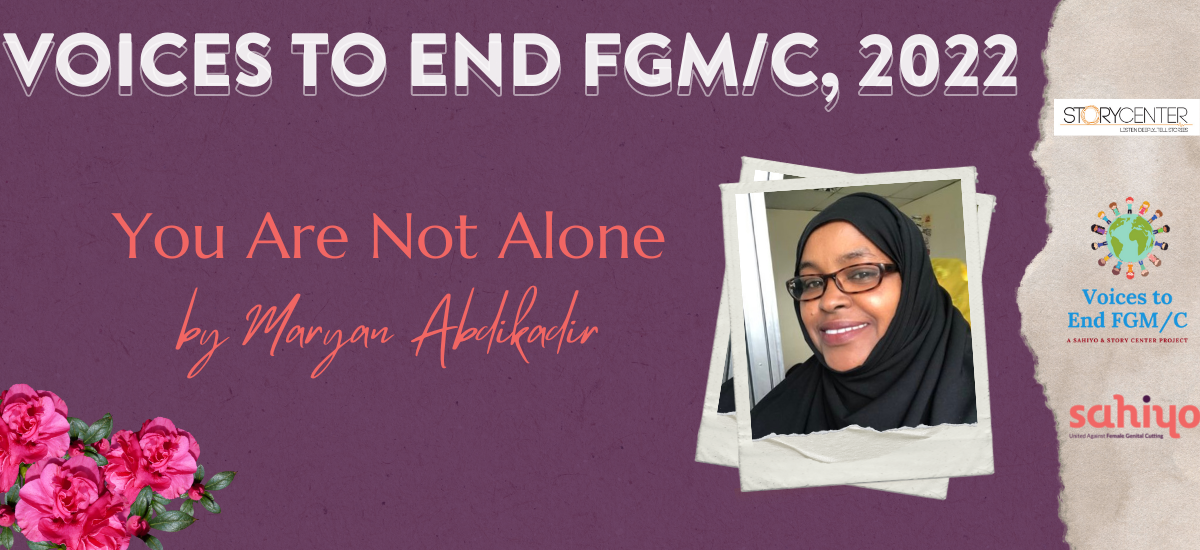
By Maryan Abdikadir Why did you want to attend the workshop and share your story? I love storytelling and I come from a long line of storytellers and poets. I believe stories have a way of capturing the minds, leaving lasting impressions and/or education. Being a survivor of Female Genital...
By Anam I like to hear stories because they help me understand people. Sometimes, they help me understand myself. So, when I heard storytellers talk about their experience with female genital mutilaiton (FGM), I thought about my own. The Voices to End FGM/C digital Sstorytelling workshop helped me put into...
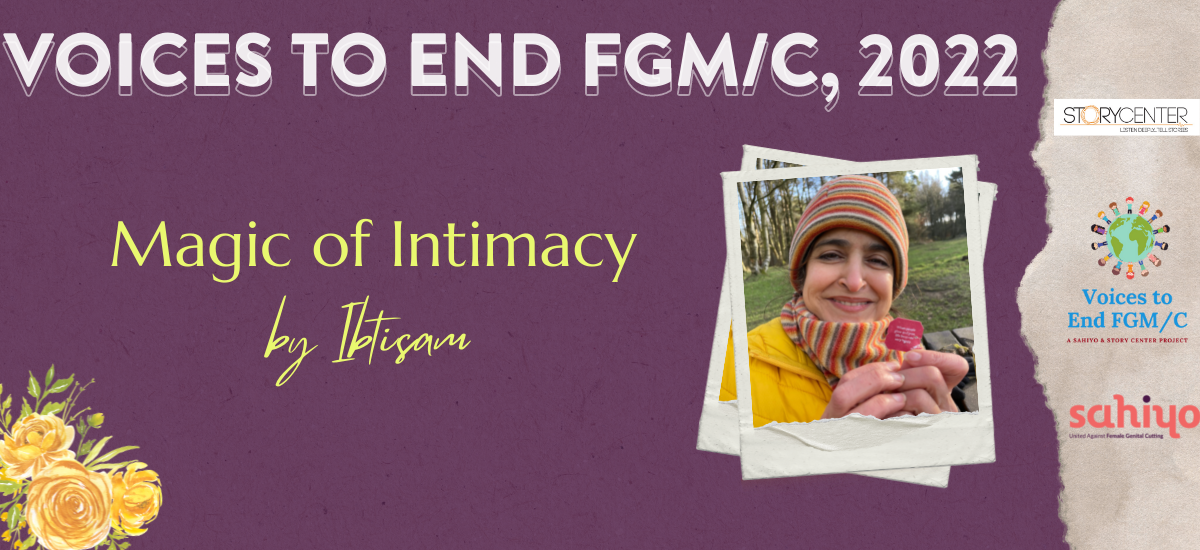
By Ibtisam Attending this workshop to share my story is now perhaps an opening to a bigger vision of what I call: Magic of Intimacy. I had viewed over a dozen Voices to End FGM/C stories and attended Sahiyo’s webinars over the last couple of years. As much as I...
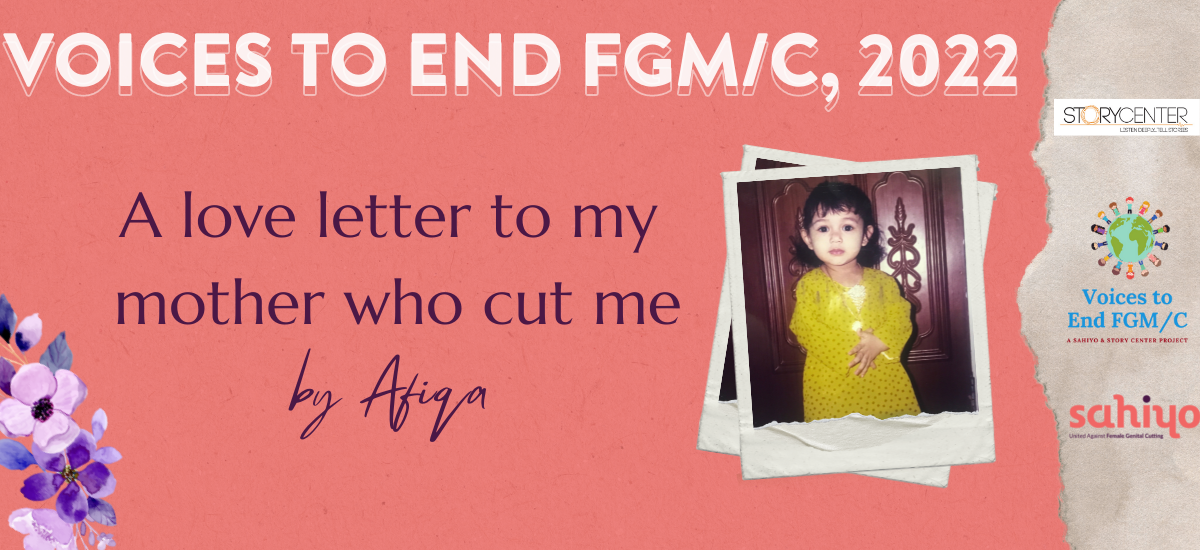
By Afiqa Years ago, I learned of Malay classical and modern manuscripts on sex and erotic imageries by Malay women writers at a talk. Most were written under pseudonyms or not given credit if not a man. But a Malay women writer, Khatijah Terung, struck me with her bold, vulnerable,...
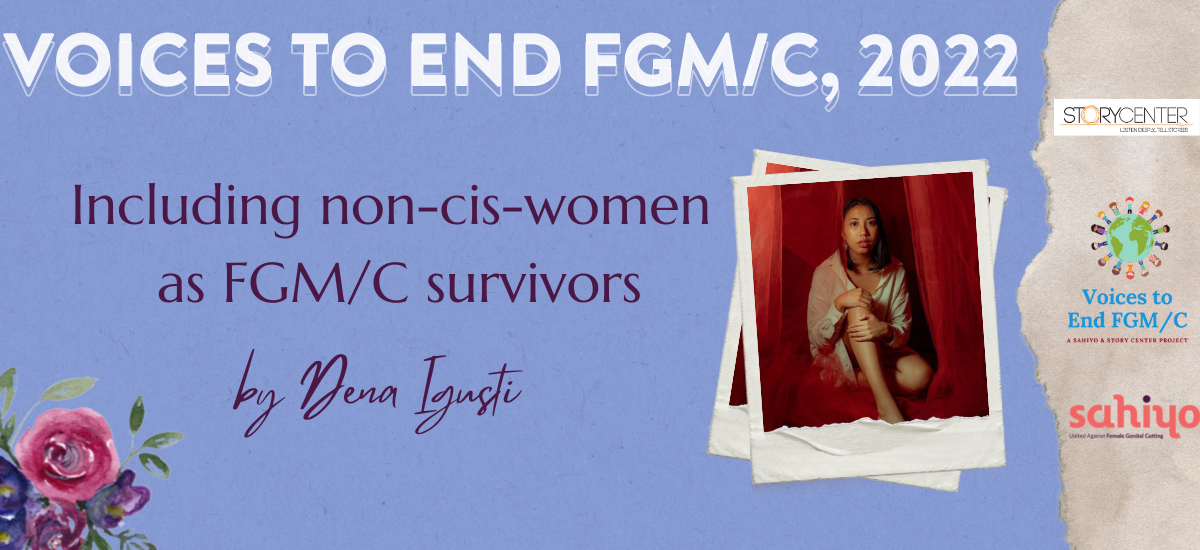
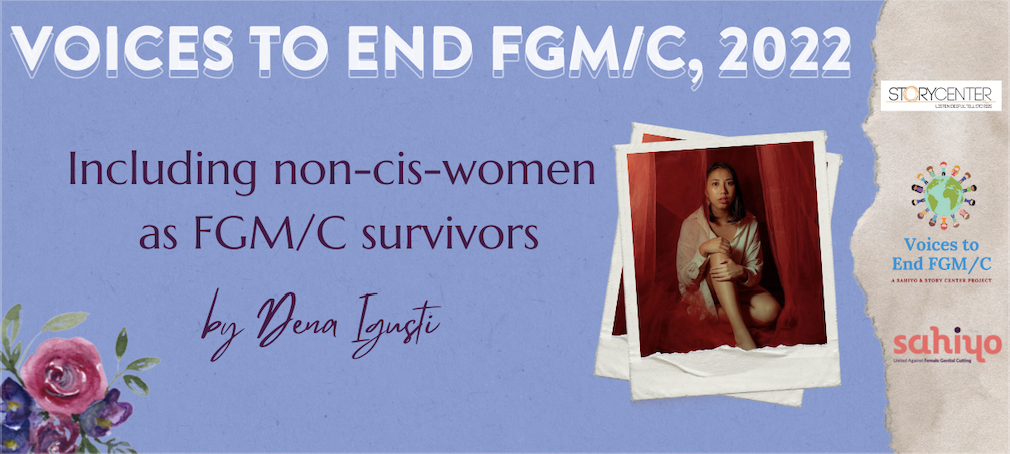
By Dena Igusti I wanted to be a part of this year's Voices to End FGM/C digital storytelling workshop so I could talk more about my experiences navigating being a non-binary survivor of FGM/C. Unfortunately, a lot of statistics and narratives surrounding FGM/C only focus on cisgender women. In order...
By Anonymous Attending the digital storytelling workshop was an opportunity that came by and seemed interesting. After the first meeting and learning more about the Voices To End FGM/C program, I was even more intrigued. I wanted to be able to create a story that people would feel deeply and...
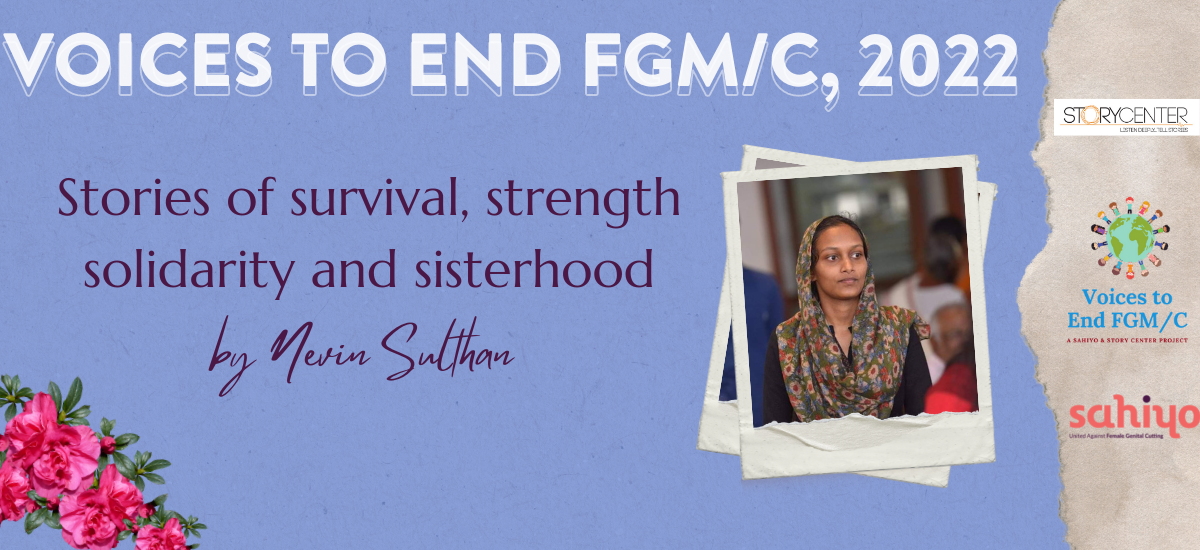
By Nevin Sulthan I am a survivor of female genital mutilation (FGM), and I have met many others from my community who have undergone the same violation. Even though there are many survivors of FGM, the community hardly acknowledges its existence. The digital storytelling workshop Voices To End FGM created...
“Witnessing others be vulnerable and open in telling their stories helped to validate my experience. I was able to pull scattered thoughts and memories into a clear and concise picture.” ~Zahra, Voices Storyteller With 200 million people having undergone female genital mutilation/cutting (FGM/C) worldwide, many stories are waiting to be...
By Anonymous Attending the digital storytelling workshop was an opportunity that came by and seemed interesting. After the first meeting and learning more about the Voices To End FGM/C program, I was even more intrigued. I wanted to be able to create a story that people would feel deeply and find some sort of hope when...
By Zahra Qaiyumi In the process of creating a video as part of the Voices to End FGC project, I was able to pull scattered thoughts and memories into a clear and concise picture. The workshop allowed me to contemplate the different aspects of my experience as a survivor and helped me...
By Anam I like to hear stories because they help me understand people. Sometimes, they help me understand myself. So, when I heard storytellers talk about their experience with female genital mutilaiton (FGM), I thought about my own. The Voices to End FGM/C digital Sstorytelling workshop helped me put into...
By Dena Igusti I wanted to be a part of this year's Voices to End FGM/C digital storytelling workshop so I could talk more about my experiences navigating being a non-binary survivor of FGM/C. Unfortunately, a lot of statistics and narratives surrounding FGM/C only focus on cisgender women. In order for me...
By Priya Goswami I was 11 years old when my mother said I was ‘impure’ now that I got my periods. The idea of ‘impurity’ in front of God enraged the eleven-year-old me. I wanted to know if my Muslim and Christian friends were also told not to ‘touch God’...
By Zahara Before I participated in this year’s Voices to End Female Genital Mutilation/Cutting (FGM/C) workshop, I had seen blurbs from previous years. In my head, the Voices program was an in-person workshop where a community of people got together to share their stories. However, COVID-19 happened, and this in-person experience was...
Being anonymous does not mean that I am powerless. Being anonymous does not mean that I don’t have a name, or an identity. Being anonymous does not mean that I don’t have words. Being anonymous does not take my freedom away from me. Behind that anonymous, is a mind and...
By Nicole Mitchell I was inspired to join this workshop because the idea of using storytelling as a medium to fight oppression is particularly powerful. I also wanted to listen to other women tell their stories and support them in speaking truth to power. https://www.youtube.com/embed/X4weTNiAmL0 My hope is that by being vulnerable...
By Nesha Abiraj Sometimes, our path chooses us. I became a lawyer 12 years ago because I wanted to help people who had been wronged get legal justice. If I had left that conversation and did nothing, knowing the risk millions of girls face, and knowing that the law was...
By Anonymous How do you associate yourself with a community you are not actively part of? How do you find comfort in a space that is familiar and foreign at the same time? How do you find answers and solace from strangers across continents? It is through experiences and stories....
By Arefa Cassoobhoy Every Wednesday evening for six weeks earlier this year, I logged on to my computer for a video meeting with 12 other women for the Voices to End Female Genital Mutilation/Cutting (FGM/C) digital storytelling workshop hosted by Sahiyo and StoryCenter. I did this to create a video that motivates...
By Lola Ibrahim Storytelling is an important aspect in ending female genital mutilation/cutting (FGM/C) and finding closure for survivors emotionally and mentally. You are able to pour out all of these random thoughts and feelings you bottled up for so long. It gives you the opportunity to begin the healing process...
By Hunter Kessous When I first joined Sahiyo’s team as an intern, I was told to take a look at the Voices to End Female Genital Mutilation/Cutting (FGM/C) project on YouTube to get a glimpse of how Sahiyo uses storytelling in its approach to ending FGC. I was probably only...
By Absa Samba When I signed up to participate in the Voices to End FGM/C online digital storytelling workshop, I starting thinking about what story I would tell. So many incoherent ideas ran to my mind. It wasn’t until I attended the first session that I knew what story I wanted to...
This blog is part of a series of reflective essays by participants of the Voices to End FGM/C workshops run by Sahiyo and StoryCenter. Through residential and online workshops on digital storytelling, Voices to End FGM/C enables those who have been affected by female genital mutilation/cutting to tell their stories through their own perspectives, in their...
This blog is part of a series of reflective essays by participants of the Voices to End FGM/C workshops run by Sahiyo and StoryCenter. Through residential and online workshops on digital storytelling, Voices to End FGM/C enables those who have been affected by female genital mutilation/cutting to tell their stories through their own perspectives, in their...
This blog is part of a series of reflective essays by participants of the Voices to End FGM/C workshops run by Sahiyo and StoryCenter. Through residential and online workshops on digital storytelling, Voices to End FGM/C enables those who have been affected by female genital mutilation/cutting to tell their stories through their own perspectives, in their...
This blog is part of a series of reflective essays by participants of the Voices to End FGM/C workshops run by Sahiyo and StoryCenter. Through residential and online workshops on digital storytelling, Voices to End FGM/C enables those who have been affected by female genital mutilation/cutting to tell their stories through their own perspectives, in their...
This blog is part of a series of reflective essays by participants of the Voices to End FGM/C workshops run by Sahiyo and StoryCenter. Through residential and online workshops on digital storytelling, Voices to End FGM/C enables those who have been affected by female genital mutilation/cutting to tell their stories through their own perspectives, in their...
This blog is part of a series of reflective essays by participants of the Voices to End FGM/C workshops run by Sahiyo and StoryCenter. Through residential and online workshops on digital storytelling, Voices to End FGM/C enables those who have been affected by female genital mutilation/cutting to tell their stories through their own perspectives, in their...
By Su Sun When I was contacted by Mariya in the beginning of 2019 to join the Voices to End FGM/C workshop, I’d just found out I was pregnant. Previous experiences of obstetric trauma roamed around my head and it seemed to me that this project could be an opportunity...
This blog is part of a series of reflective essays by participants of the Voices to End FGM/C workshops run by Sahiyo and StoryCenter. Through residential and online workshops on digital storytelling, Voices to End FGM/C enables those who have been affected by female genital mutilation/cutting to tell their stories through their own perspectives, in their...
This blog is part of a series of reflective essays by participants of the Voices to End FGM/C workshops run by Sahiyo and StoryCenter. Through residential and online workshops on digital storytelling, Voices to End FGM/C enables those who have been affected by female genital mutilation/cutting to tell their stories through their own perspectives, in their...
This blog is part of a series of reflective essays by participants of the Voices to End FGM/C workshops run by Sahiyo and StoryCenter. Through residential and online workshops on digital storytelling, Voices to End FGM/C enables those who have been affected by female genital mutilation/cutting to tell their stories through their own perspectives, in their...
This blog is part of a series of reflective essays by participants of the Voices to End FGM/C workshops run by Sahiyo and StoryCenter. Through residential and online workshops on digital storytelling, Voices to End FGM/C enables those who have been affected by female genital mutilation/cutting to tell their stories through their own perspectives, in their...
This blog is part of a series of reflective essays by participants of the Voices to End FGM/C workshops run by Sahiyo and StoryCenter. Through residential and online workshops on digital storytelling, Voices to End FGM/C enables those who have been affected by female genital mutilation/cutting to tell their stories through their own perspectives, in their own words. By...
This blog is part of a series of reflective essays by participants of the Voices to End FGM/C workshops run by Sahiyo and StoryCenter. Through residential and online workshops on digital storytelling, Voices to End FGM/C enables those who have been affected by female genital mutilation/cutting to tell their stories through their own perspectives, in their...
This blog is part of a series of reflective essays by participants of the Voices to End FGM/C workshops run by Sahiyo and StoryCenter. Through residential and online workshops on digital storytelling, Voices to End FGM/C enables those who have been affected by female genital mutilation/cutting to tell their stories through their own perspectives, in their...
This blog is part of a series of reflective essays by participants of the Voices to End FGM/C workshops run by Sahiyo and StoryCenter. Through residential and online workshops on digital storytelling, Voices to End FGM/C enables those who have been affected by female genital mutilation/cutting to tell their stories through their own perspectives, in their...
This blog is part of a series of reflective essays by participants of the Voices to End FGM/C workshops run by Sahiyo and StoryCenter. Through residential and online workshops on digital storytelling, Voices to End FGM/C enables those who have been affected by female genital mutilation/cutting to tell their stories through their own perspectives, in their...
This blog is part of a series of reflective essays by participants of the Voices to End FGM/C workshops run by Sahiyo and StoryCenter. Through residential and online workshops on digital storytelling, Voices to End FGM/C enables those who have been affected by female genital mutilation/cutting to tell their stories...
This blog is part of a series of reflective essays by participants of the Voices to End FGM/C workshops run by Sahiyo and StoryCenter. Through residential and online workshops on digital storytelling, Voices to End FGM/C enables those who have been affected by female genital mutilation/cutting to tell their stories through their own perspectives, in their...
This blog is part of a series of reflective essays by participants of the Voices to End FGM/C workshops run by Sahiyo and StoryCenter. Through residential and online workshops on digital storytelling, Voices to End FGM/C enables those who have been affected by female genital mutilation/cutting to tell their stories through their own perspectives, in their...
This blog is part of a series of reflective essays by participants of the Voices to End FGM/C workshops run by Sahiyo and StoryCenter. Through residential and online workshops on digital storytelling, Voices to End FGM/C enables those who have been affected by female genital mutilation/cutting to tell their stories through their own perspectives, in their...
By Siti Kusujiarti In September 2019, I participated in the Voices to End FGM/C Workshop in Asheville. In this workshop I met with a group of amazing participants and facilitators. From the participants I learned various experience and stories and felt that we had a sense of solidarity and strength...
This blog is part of a series of reflective essays by participants of the Voices to End FGM/C workshops run by Sahiyo and StoryCenter. Through residential and online workshops on digital storytelling, Voices to End FGM/C enables those who have been affected by female genital mutilation/cutting to tell their stories through their own perspectives, in their...
By Maryah Haidery Last December I participated in a Sahiyo activist retreat where I learned the unique power that storytelling has to teach, stimulate, and inspire audiences while offering the storyteller a sense of empowerment and catharsis. That’s why I was excited to reunite with some of the brave women I met on...
By Zehra Patwa Shame. Deceit. Confusion. On the first day, sitting around a large table in a light-filled room in the StoryCenter workshop space in Berkeley, California, these words were repeated over and over again by each woman sharing her story of being cut as a young girl. And in most cases, the story...
By Severina Lemachokoti I chose to tell this particular story about my experience with Female Genital Mutilation (FGM) because the story defines me, who I am, and shows what my culture/tradition branded me with. The story reflects the reality of what I went through and what I felt as a little girl....
By Anonymous I am a female genital cutting (FGC) survivor. I was born in Somalia, a country with one of the highest FGC rates in the world. Recently, Somalia was named by the Thomson Reuters Foundation as being the fourth most dangerous country for women, with FGC happening to 98% of women. I...